BetaBeta
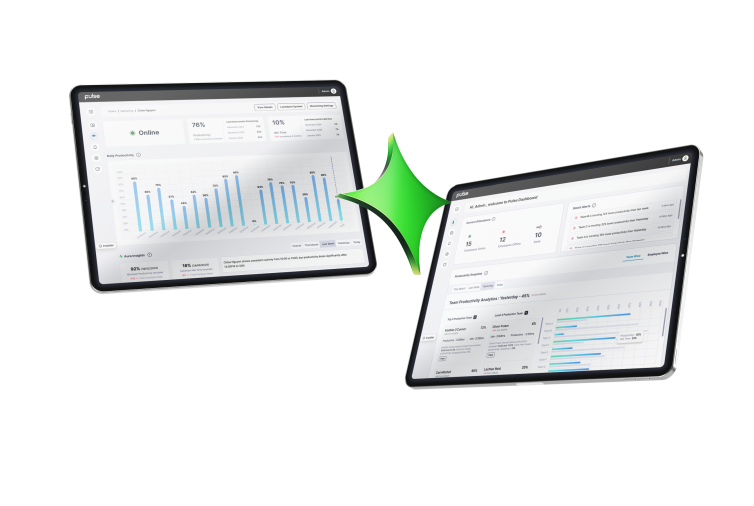
Safeguard your team’s well-being with AI-driven burnout detection and productivity-enhancing insights, designed to keep employees engaged, healthy, and performing at their best.

Healthy work culture is essential to preventing and maintaining burnout in one's job and influencing employee engagement levels. It builds an enabling environment high performing amongst the individual workers.
Encourage open communication: Talk about stressors and create an open feedback culture towards a strong climate.
Strive for a good balance in the work environment: Hold workloads at manageable and keep a culture that appreciates the health of employees and their work-life balance.
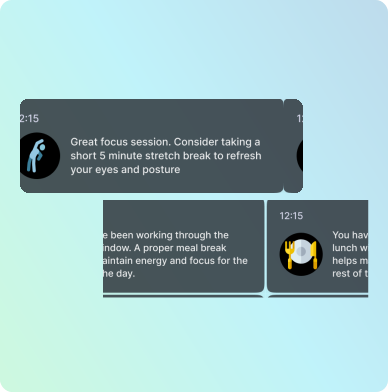
Facilitate regular time-outs: Break and time-off periods are some essential things that you have to include in the record of giving time for reducing stress and boosting mental clarity.
Inculcate the culture of appreciation and support: Encourage constant recognition and celebration of employee dedication and efforts into productive working environments.

Motivation among employees is essential for creating lengths to productivity and engagement. Promotion of personal well-being enables continuous performance, without the cost of health.
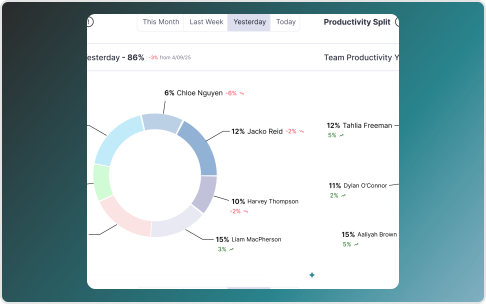
Give Prize-worthy Adherence: Identify and recognise outstanding achievers using insightful views, extremely detailed, and data-empowered employee behavioural and performance tracking.
Enable your workforce to take breaks: Allow the employees to organise their schedule so they can refresh and concentrate on effective working.
Provide individualistic influence: Use big data for personal assistance to help in coping with poor workload stress which may lead to employee burnout.
Establish a transparent environment: Build an understanding of the expectations of employees so they can see the value in doing things and feel motivated to do it.
Workload management tools are a perfect panacea for almost anyone involving an employer to create a harmony between employee wellness and productivity. A good tool ensures that the manager can assign work, observe the file activity, and minimise burnout.
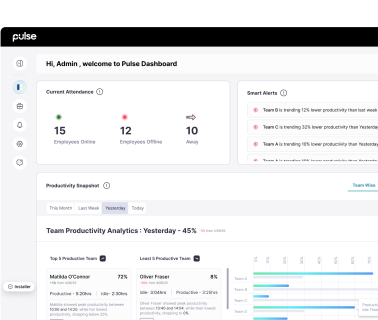
Workload management is crucial to ensure that employees are not unfairly stressed and hence maintain overall performance and job satisfaction. Workload management ensures an even distribution of tasks through the proper utilisation of resources so that productivity is maximised, and the well-being of employees is not compromised.
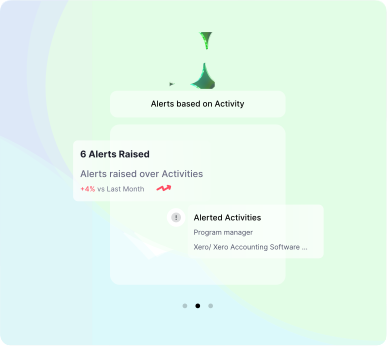
Workload management tools are essential to reducing stress and preventing burnout. Tools that help with apportion assignments can give workspace conducive of workers' well-being beneficial without burdens. Workload stress identification: Utilizing advanced tools can identify the stress points in workflow and make recommendations for interventions to prevent employee burnouts. Balance in Workload: Keeping the workload even helps employees feel supported and less overwhelmed.
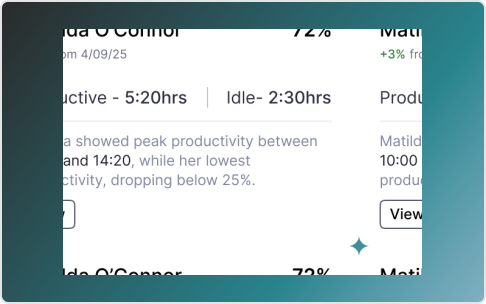
Work strategies involve appropriate priorities in tasks for timely performance of high-priority ones with required resources, thus eliciting optimum efficiency while controlling stress on employees. Clarity of priorities: Workload tools provide clarity on which tasks are a priority, giving employees insight into what is essential. Prevention of task overload: By tracking task completion, these tools ensure that employees are not burdened with tasks of little importance.
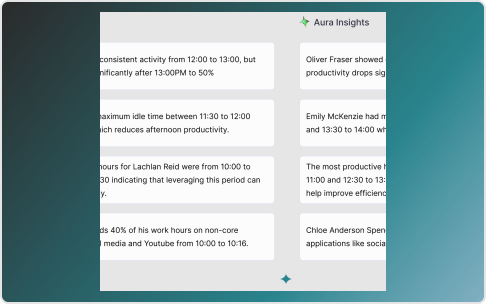
Employees can do their best work when they are not burdened with overwhelming work. Workload management tools help an organisation build such an environment by enabling employees to do their best. Quality of productivity: Employees not stressed by work are given adequate time and energy to focus on producing goods of high quality. Well-aligned goals: The effective distribution of workload provides employees with the ability to align their most important deliverables with business goals, so that their activities yield great impact.